
Testing Services
Cryogenic testing
Valves and connectors qualified at -196 °C on a rig Fluid Controls built itself, because no catalogue bench covered it.
- Lowest test temperature
- -196 °C
- Liquid nitrogen
- Needle valves certified
- PN400
- Test report published
- The rig itself
- In house
- Developed indigenously
At liquid-nitrogen temperature elastomers pass through their glass transition and alloys contract by different amounts, so a joint that is tight at ambient can open and reseal on the way down. None of it is predictable from an ambient test, so cryogenic service is qualified at temperature.
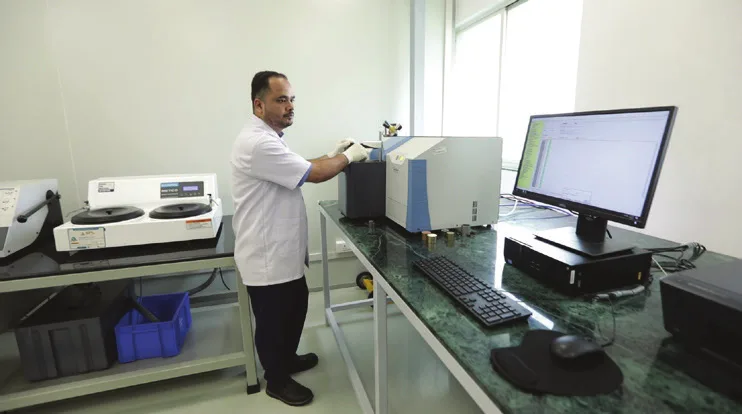
What we run
Cryogenic valve testing
Seat and stem-seal tightness measured at temperature and through the cooldown, because a valve that seals cold may not have sealed on the way there.
Cryogenic connector testing
Tube connections held at temperature to load the contraction mismatch between body, ferrule and tube - the mechanism no ambient proof test will find.
Needle valves to PN400
The certified programme, with the cryogenic test report published on the certifications page rather than summarised here.
Standards applied
BS 6364
Cryogenic valves. The basis on which the -196 °C programme is reported.
What we can show
A published test report
The cryogenic test report for needle valves to PN400 is on the certifications page, downloadable rather than described.
A rig we had to build
Cryogenic benches are not a catalogue item. This one was developed indigenously - the same reason more than twenty-five new products have come out of the R&D centre since 2011.
One file, one laboratory
A cryogenic result can sit alongside the proof, burst, impulse and material results for the same part, produced under one accreditation.