
Product
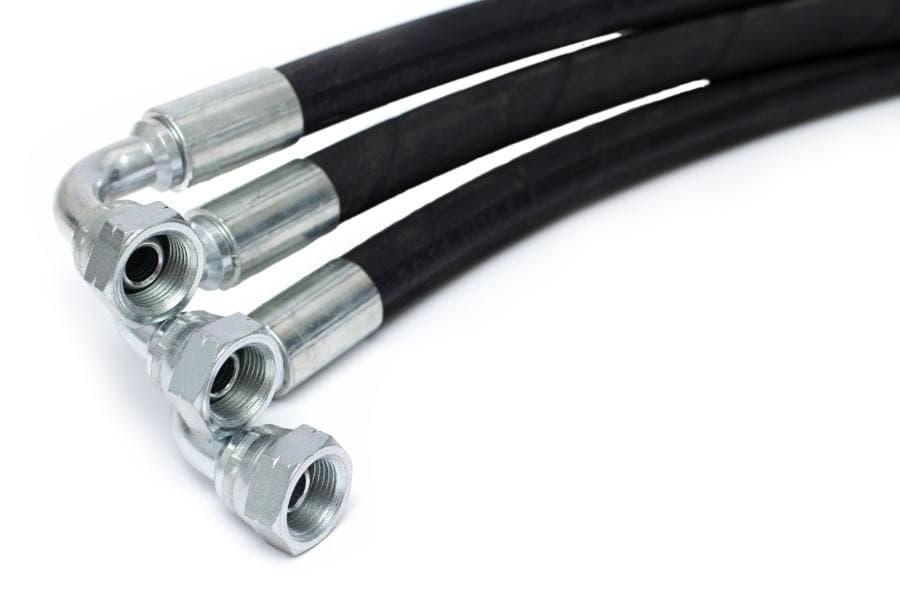
Rubber Hose EN 854
Textile braid hydraulic hose to EN 854 in 1TE, 2TE and 3TE types, rated to 160 bar and suitable for railway braking systems.
Hoses & Hose Connectors
Rubber Hose EN 854
EN 854 replaces the steel wire braid of EN 853 with textile braid: one layer for the 1TE and 2TE types and two for 3TE, over the same synthetic rubber core and under the same weather and wear resistant cover.
The result is a lower pressure hose — 10 to 160 bar — that stays flexible and light. Fluid Controls specifies it for off-road vehicles, agricultural equipment, static equipment and general hydraulic systems, and it is the rubber hose the company names for rail and metro brake piping applications. Continuous service temperature is 40°C to 100°C.
Hoses are quality checked at source and undergo the tests the customer specifies — burst, proof, leakage and impulse — witnessed by Fluid Controls inspectors or by a third party inspector.
- Max working pressure
- up to 10–160 bar
- Body materials
- Synthetic rubber
Features
- One layer of textile braid (1TE, 2TE)
- Two layers of textile braid (3TE)
- Synthetic rubber core resistant to mineral and vegetable oil based hydraulic fluids
- Weather and wear resistant synthetic rubber cover
- Suitable for railway braking systems
Applications
- Railway and metro brake piping
- Hydraulic systems
- Coolant lines
- Water and air lines
- Off-road vehicles
- Agricultural equipment
- Static equipment
- Size range
- 1/4"–2"
- Max working pressure
- up to 10–160 bar
- Body materials
- Synthetic rubber
- Temperature
- 40 °C to 100 °C (continuous)
- Testing
- Burst, proof, leakage and impulse testing to customer specification, witnessed at source by Fluid Controls or a third party inspector
Synthetic rubber
on requestSupplied with EN 10204 3.1 material certification and heat-code traceability to the melt.
Datasheet
Download the datasheetOne field. The datasheet (or the family catalogue that includes this model) arrives in your inbox immediately.
Send to a colleagueCAD model (STEP)
Designing our part into your assembly? Request the STEP file and we’ll send it when it clears export screening.
Browse the full resource library